Artistic approach
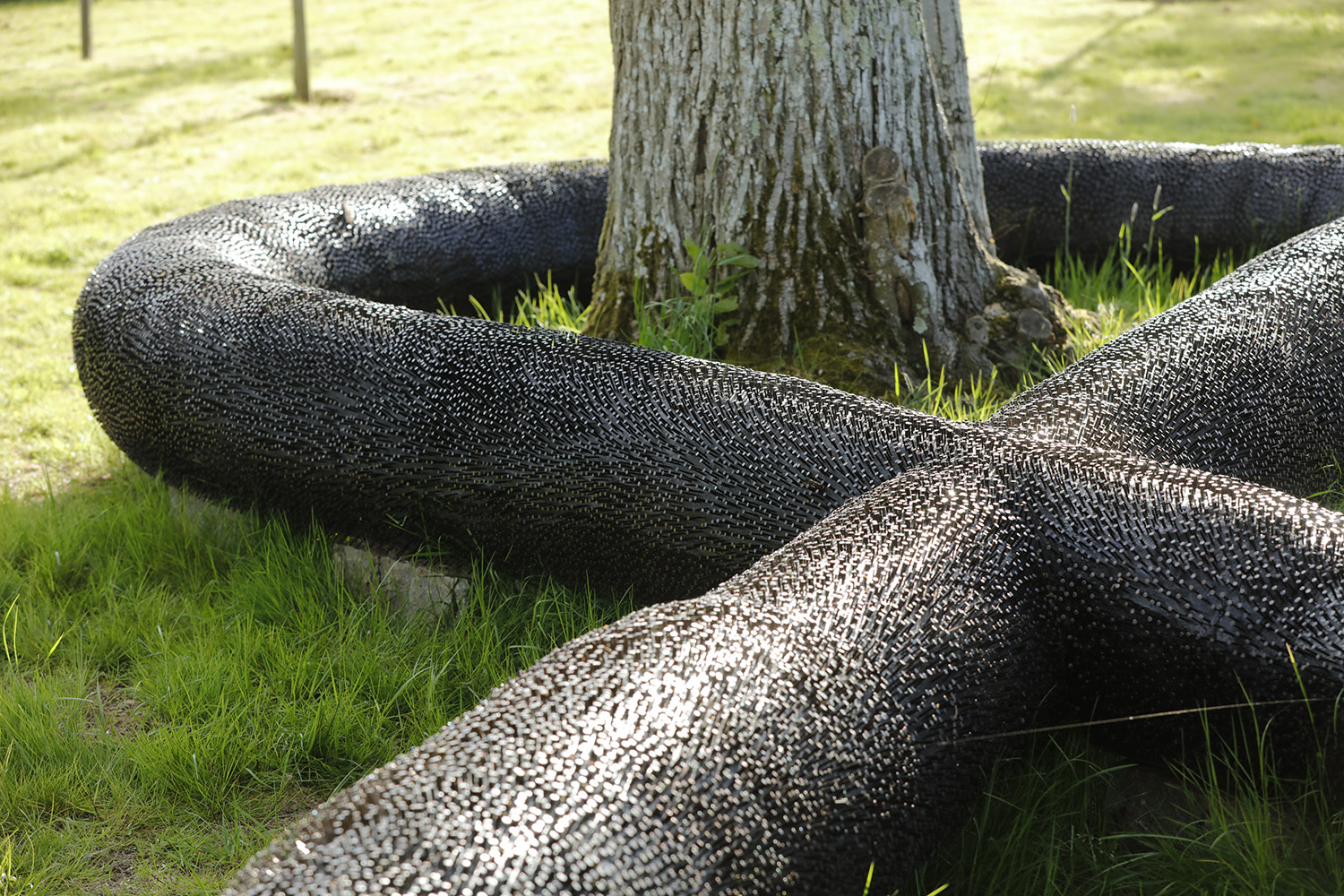
“The figure-of-eight structure linking the hornbeam and the chestnut tree evokes the inexhaustible cycle of nature, the bond that exists between all forms of life and that refers us to our own history, to our relationship with the plant world, to infinity.” Yamou.
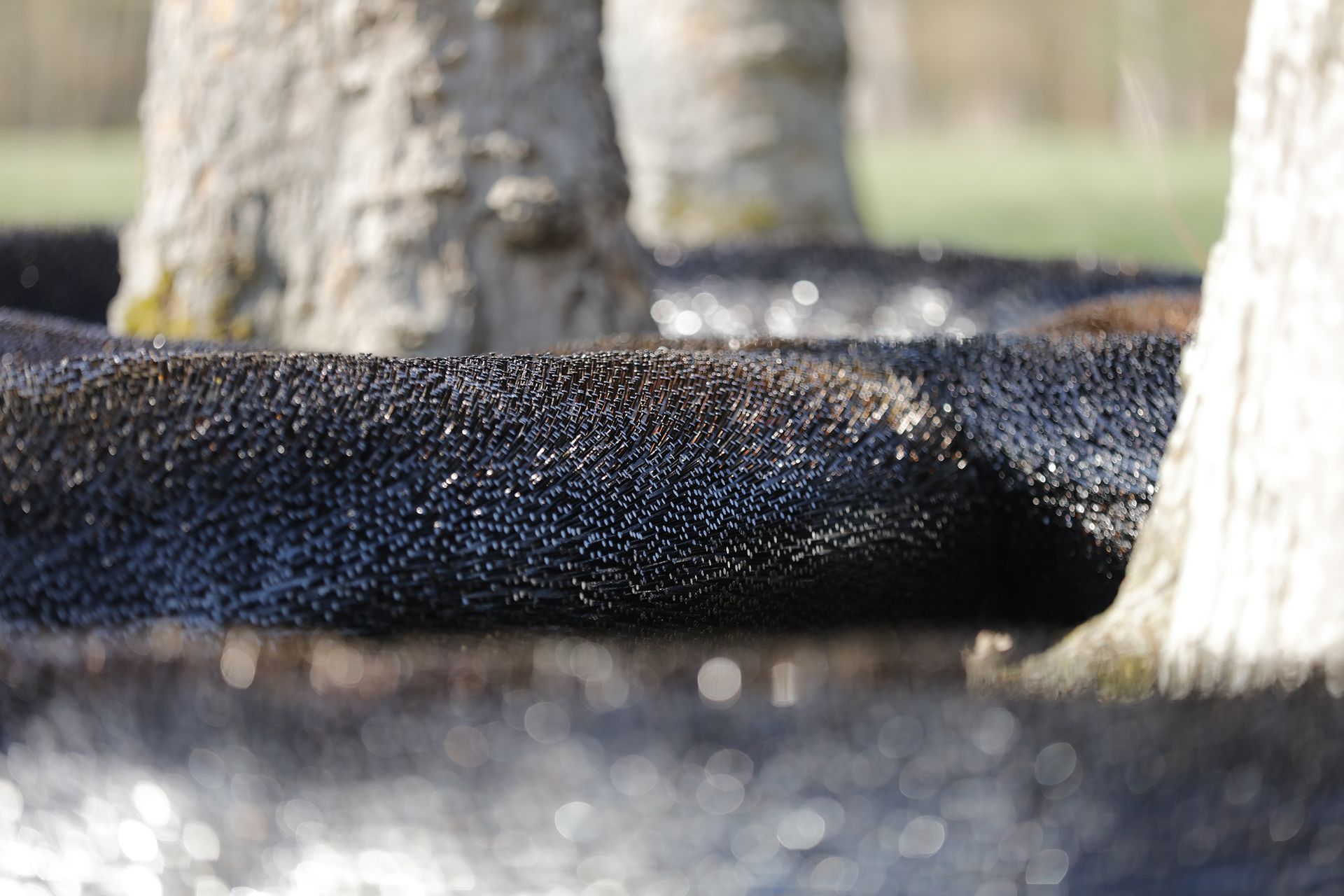
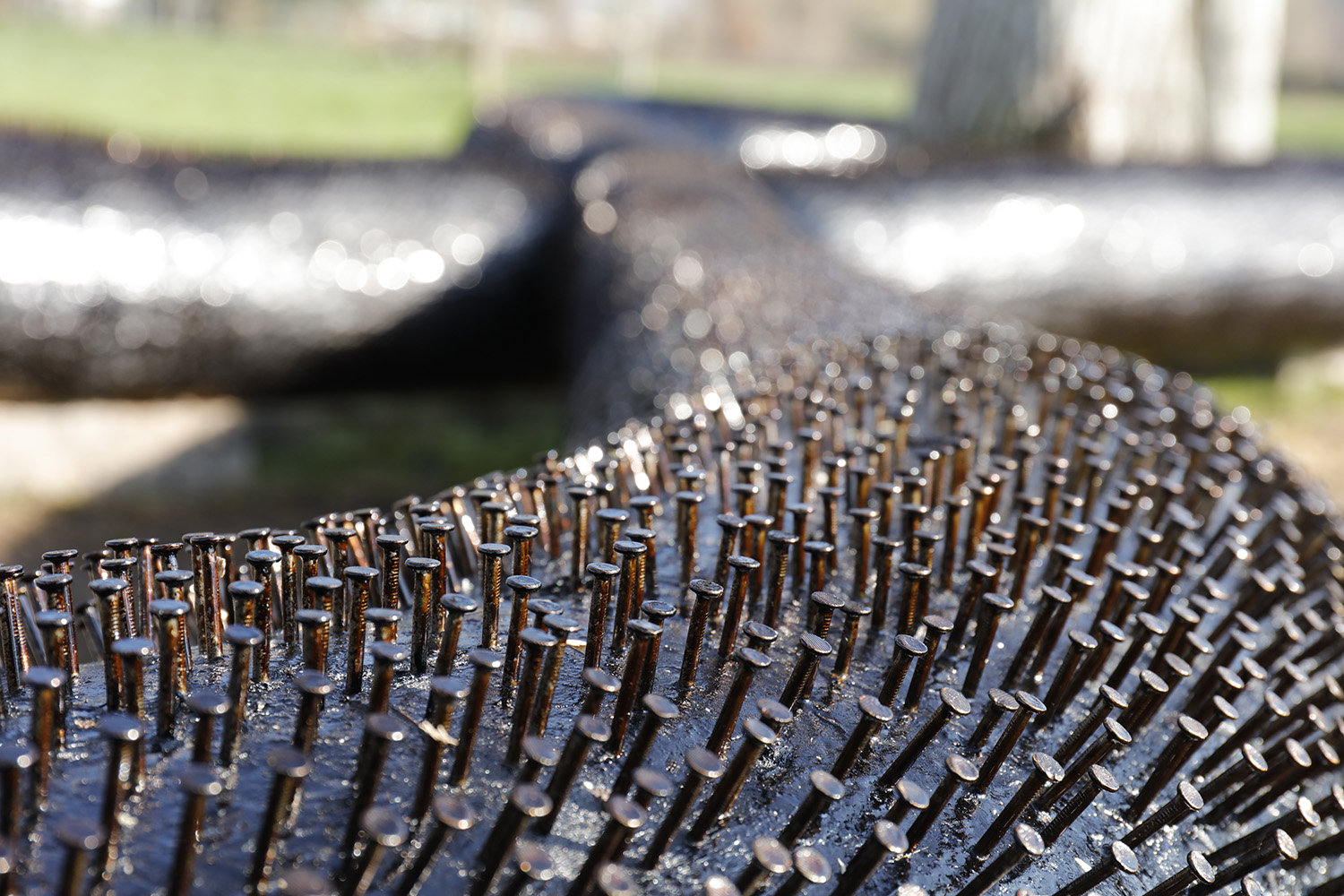
"Yamou’s sculptures have one striking particularity: they are covered with hundreds of nails, in reference to the N’Kondé statuettes of the Lower Congo. These small statuettes, mostly anthropomorphic and zoomorphic, are covered with nails and metal blades. These fetishes, supposedly endowed with supernatural powers, were used for cursing and bewitchment... By placing the nails in the presence of plants, the artist seeks to set off a twofold process: the gesture of watering the helxine to feed it rusts the metal of the nail. In other words, the water poured makes one part of the sculpture grow while it deteriorates another”. Michel Gauthier
The material of the structure, tar and metal nails, takes up a body of work that the artist has been developing for several years “on the cohabitation and interaction between living-fertile matter, plants, photosynthesis, and a sterile matter, tar, metal, etc. This cohabitation highlights the principle of a world in continuity where life is only one part of an infinite Whole”.
BIOGRAPHICAL NOTES
Yamou
MOROCCO

Yamou was born in 1959 in Casablanca and lives and works between Paris and Tahannaout, south of Marrakech. Holder of a DEA (Diplôme d'études approfondies) in sociology from the Sorbonne, he trained in drawing at the University of Toulouse le Mirail and then devoted himself to painting and sculpture. In 1990, he exhibited for the first time at the Galerie Étienne Dinet in Paris.
"Yamou is the figure of the painter in the garden, a tireless defender of living beings. In his “toiles mondes”, the life force explodes into cellular, germinative or liquid forms. Inspired by the infinitely large and the infinitely small, he connects the microscopic universe with the immensity of the cosmos.” Marie Moignard