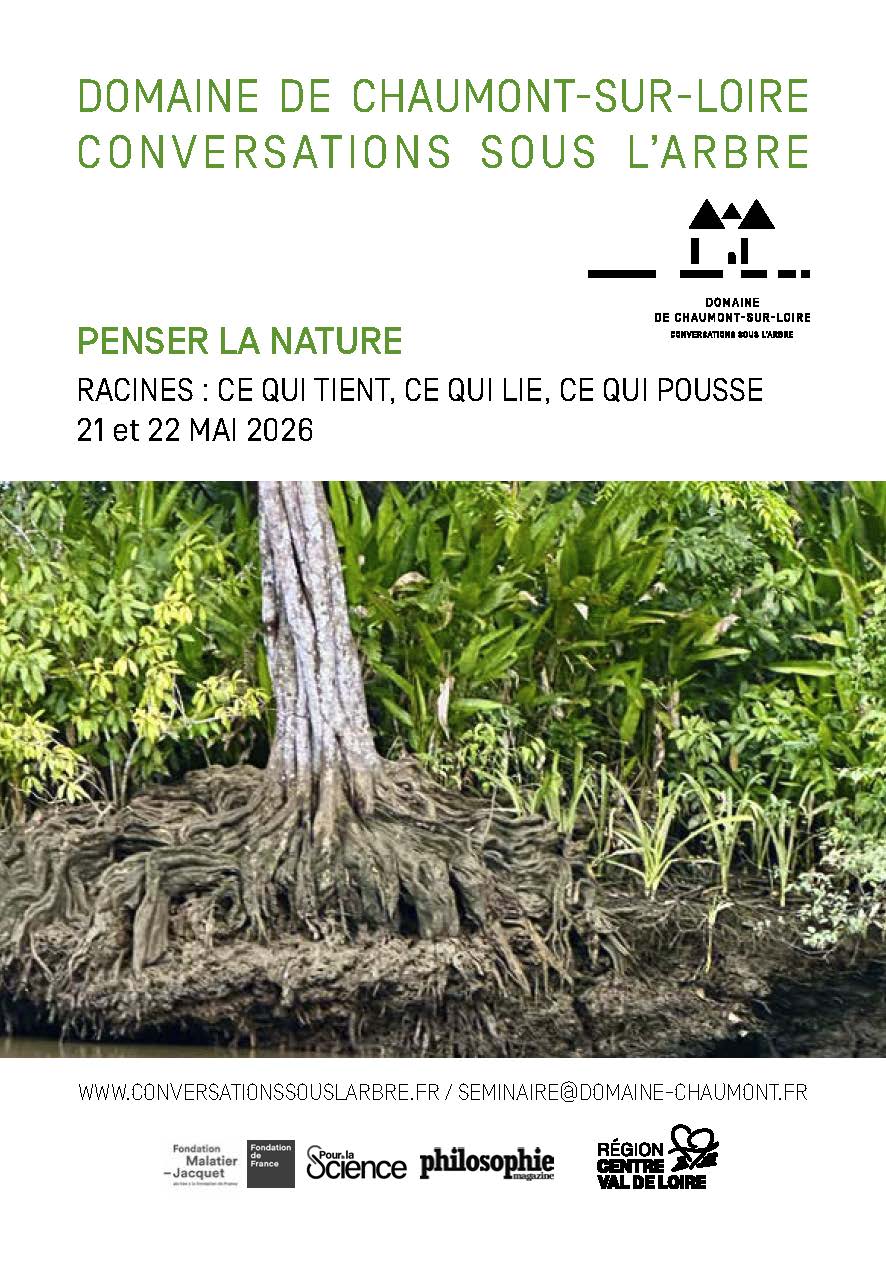
The root is first and foremost thought of as that which slips away. It escapes the eye as much as it resists definition. A plant organ, of course, through which the plant anchors itself, absorbs and exchanges; but also an explanatory principle, a metaphor, sometimes an injunction. We speak of roots to express origin, belonging, continuity, as if what constitutes us must necessarily sink in somewhere in order to hold. Yet this certainty wavers as soon as we dwell on it. For the root does not only designate a starting point, but a set of processes. To consider roots today is to agree to shift our categories, to give up oppositions between origin and becoming, anchorage and mobility, individual and environment. It is to recognise that what constitutes us is not rooted in an unchanging depth, but is woven into a set of relationships in constant transformation.
GUESTS
- Charles Stépanoff, anthropologist, director of studies at the École des hautes études en sciences sociales and member of the Laboratoire d’anthropologie sociale
- Jacques Tassin, ecologist, research director at the Centre de coopération internationale en recherche agronomique pour le développement (Cirad)
- Olivier Remaud, philosopher and director of studies at the École des hautes études en sciences sociales
- Pascal Convert, visual artist, writer and film director
PROGRAMME
Trailer...