Artistic approach
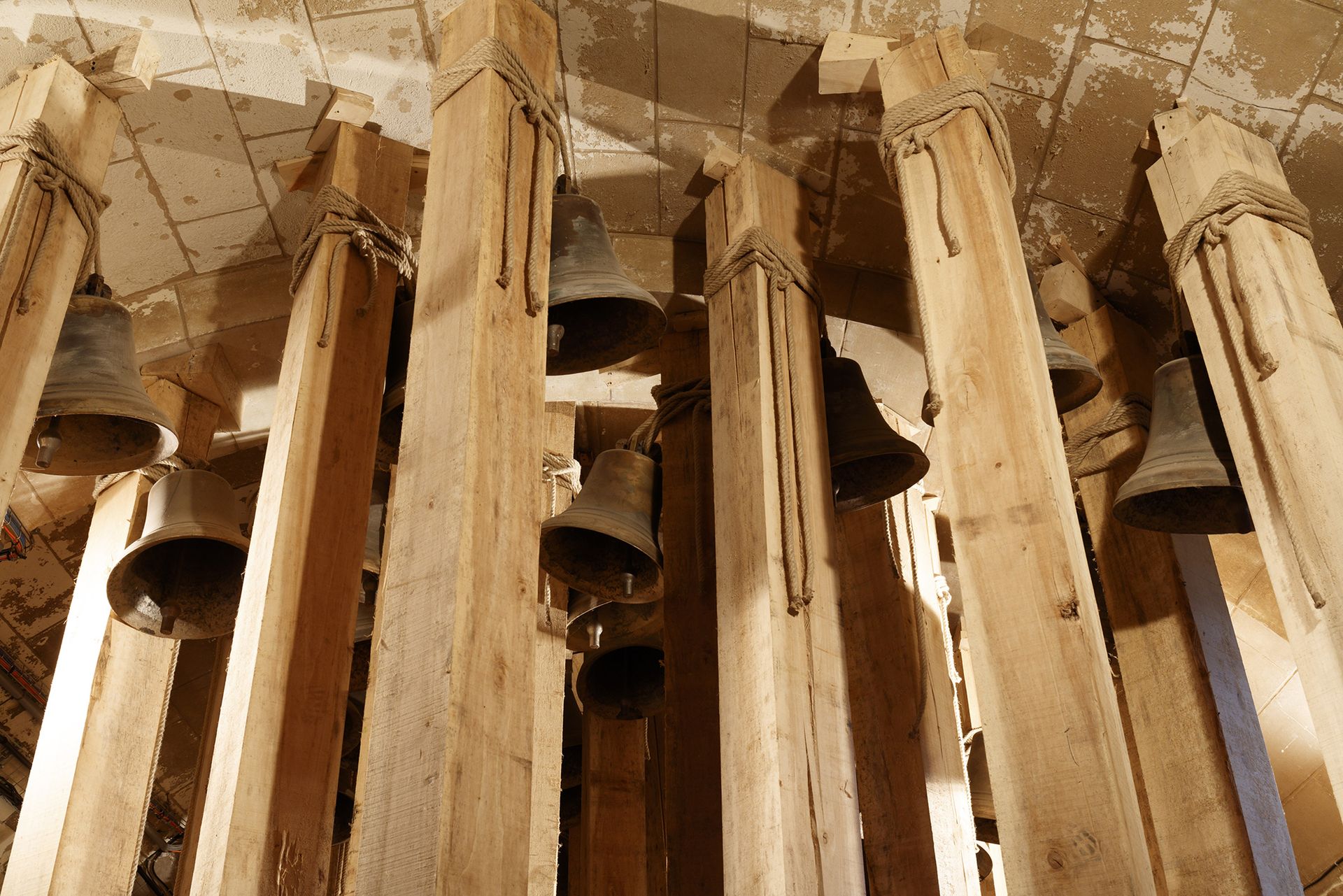
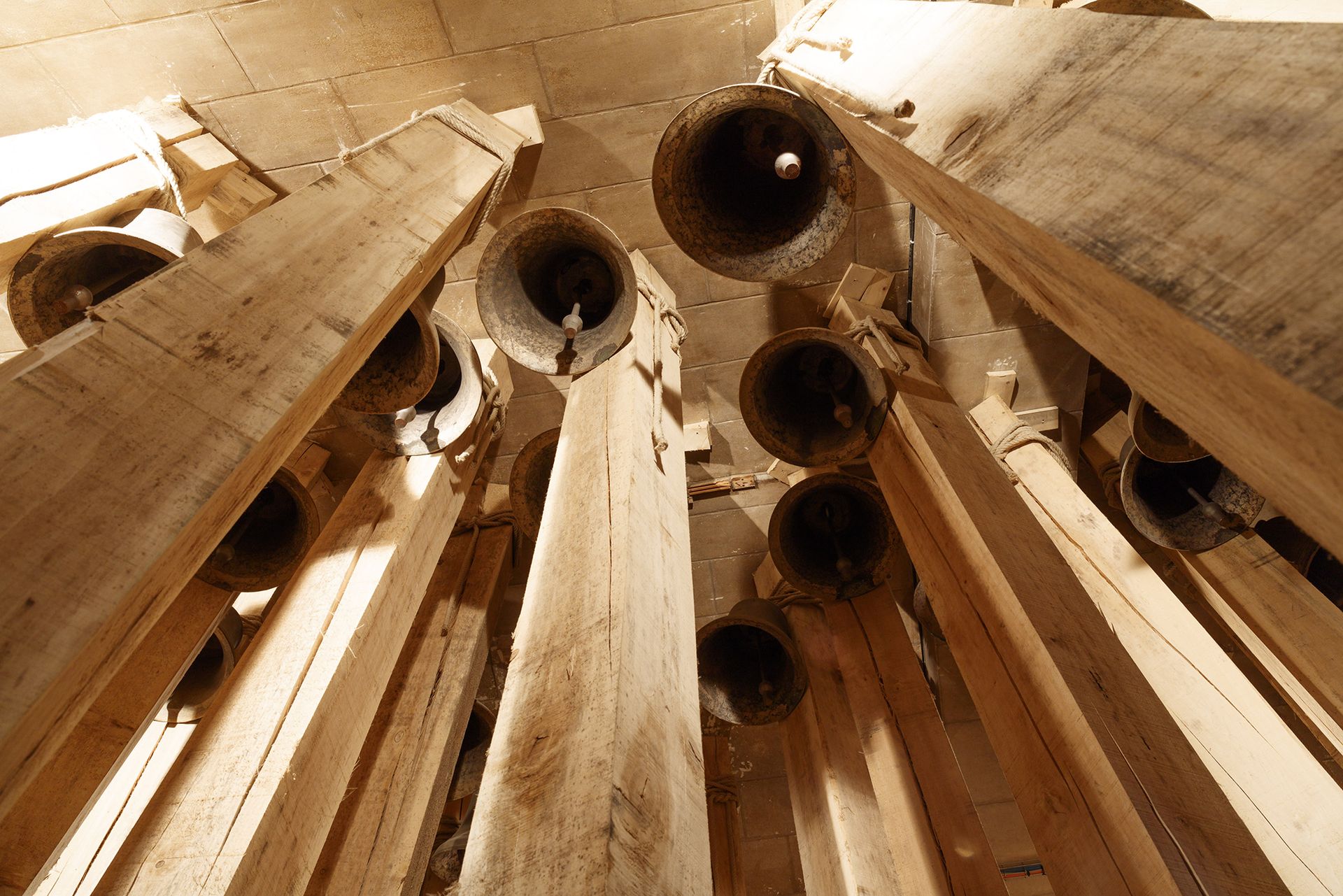
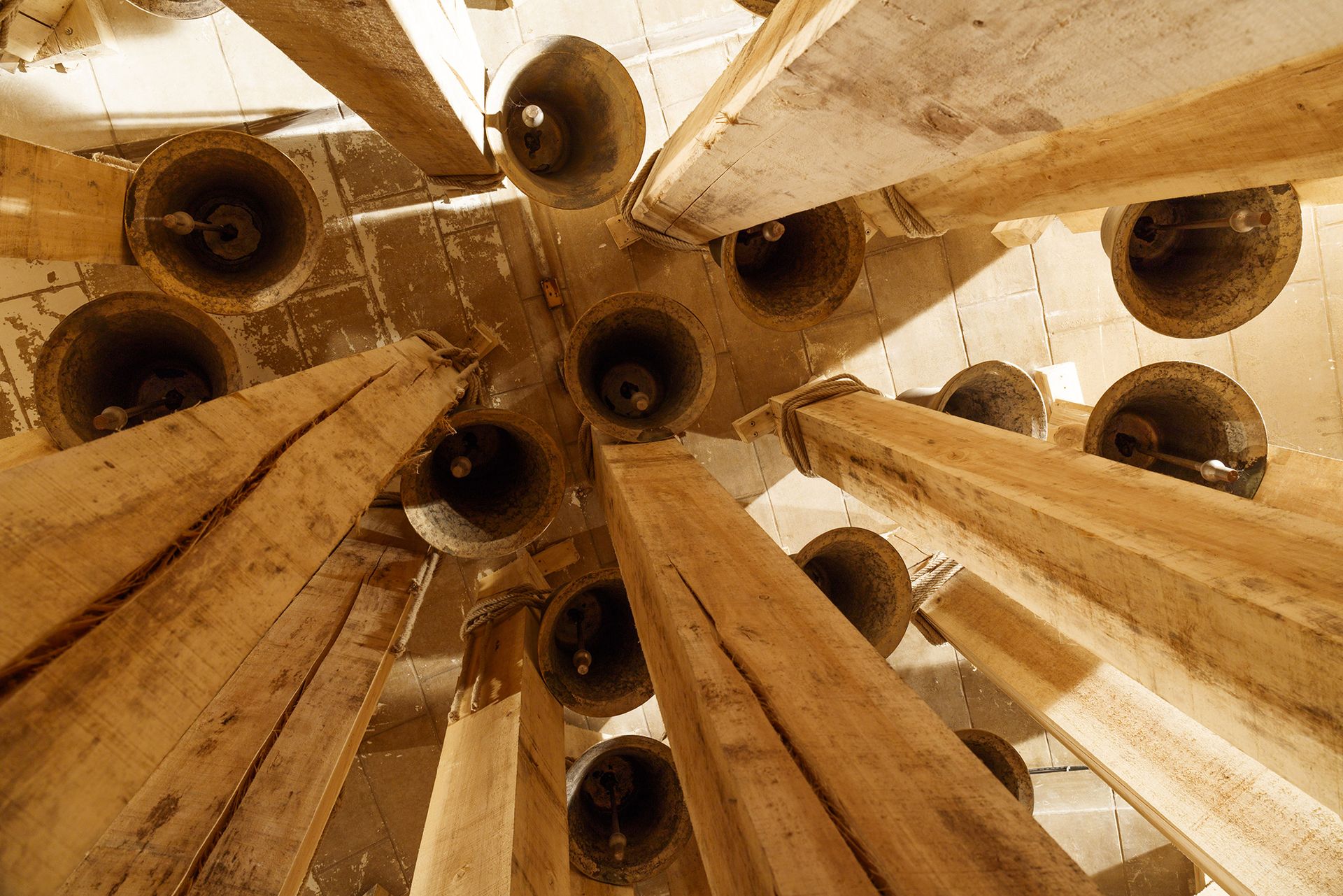
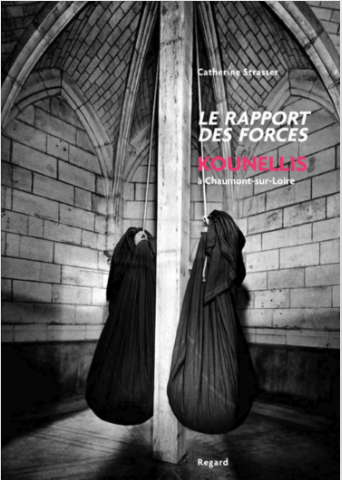
It was to Jannis Kounellis that the first of the triennial commissions of the Région Centre-Val de Loire for the Domaine de Chaumont-sur-Loire was entrusted. From 2008 to 2010, nine rooms of the Château were transformed into a fascinating labyrinth. 137 bronze bells had been hung from 137 poplar beams rising from floor to ceiling. Hidden under black sheets or stacked on top of one another, these bells, which did not ring, formed a monumental work of great evocative power.
It is a project that lives on, beyond the artist’s death, through the permanent installation of one of his works at the heart of the Château Kitchens. The poplar beams stand upright, like multiple verticals running from floor to ceiling, each supporting a bell pointing towards the floor, towards the inside of the room, roughly indicating a centre. It is not the religious symbolism of bells that is evoked here, but their resemblance to mouths, to the voice, to sound. And if Jannis Kounellis’s installation is compared with painting, the closest picture would be “The Scream” by the Norwegian artist Edvard Munch.
th BIOGRAPHICAL NOTES
Jannis KOUNELLIS
GREECE
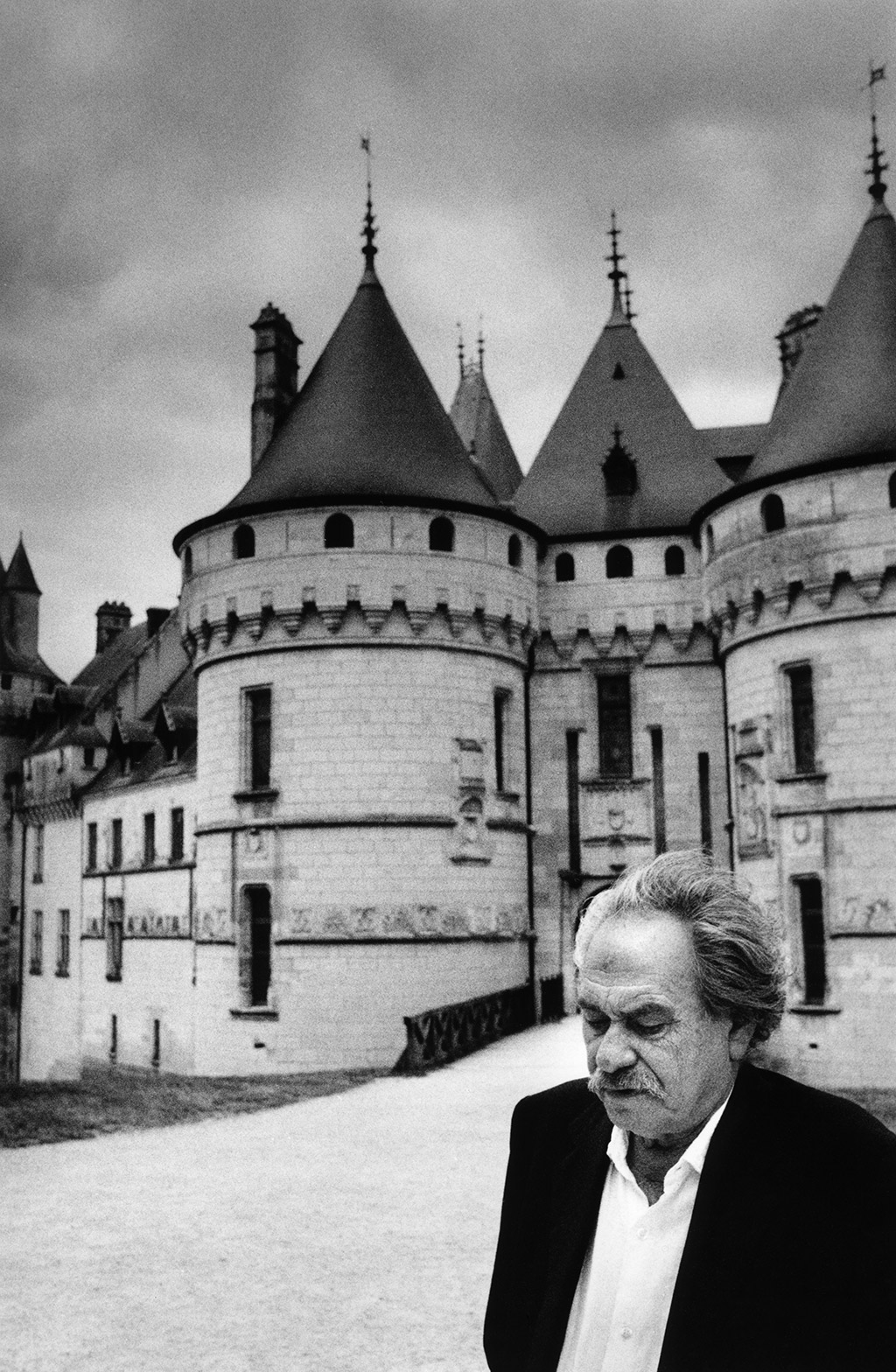
Born in 1936 in Piraeus (Greece), and having lived in Rome since the 1950s, Jannis Kounellis is regarded as a major figure of contemporary art and as one of the leading representatives of Arte Povera, alongside Mario Merz, Giovanni Anselmo, Michelangelo Pistoletto, Luciano Fabro and Giuseppe Penone. An artistic stance intended to be revolutionary, Arte Povera set out to challenge the culture industry and consumer society, and to return to the essence of the creative act, notably by using so-called "poor" materials in the creative process.
Coming to prominence in the 1970s, Jannis Kounellis built an immense body of work which, combining space and time, installation, narrative and the archetypes of a mythological memory and project, brought together painting and sculpture, architecture and music, theatre, dance and opera. He was one of the very few European artists who, in the 1960s, radically changed art and its perception, and who went on inventing a major body of work.
Jannis Kounellis was originally a painter. Coming from a pictorial tradition (Caravaggio, Munch, De Chirico, the Cubists...) far more than a sculptural one, he began his artistic career in the 1950s by painting letters, arrows and numbers on unusual supports such as wood or newspaper. In 1967 he began producing sculptures, installations and theatrical performances that were deliberately fragmentary and ephemeral. He designed several opera sets.
Jannis Kounellis's installations always drew on their spatial, architectural and historical context, and on the tensions running through the place in which they stood.
Often steeped in the sacred and in mystery, his works staged opposing forces such as duration and the ephemeral, the soft and the hard, the living and the dead, the industrial and the organic, and revealed his interpretation of the relationship between nature and culture. Creating a visual and poetic language that combined hermeticism with the sensory, Jannis Kounellis sought to convey the dialectic between "structure" and "sensibility".
He died on 16 February 2017 in Italy.