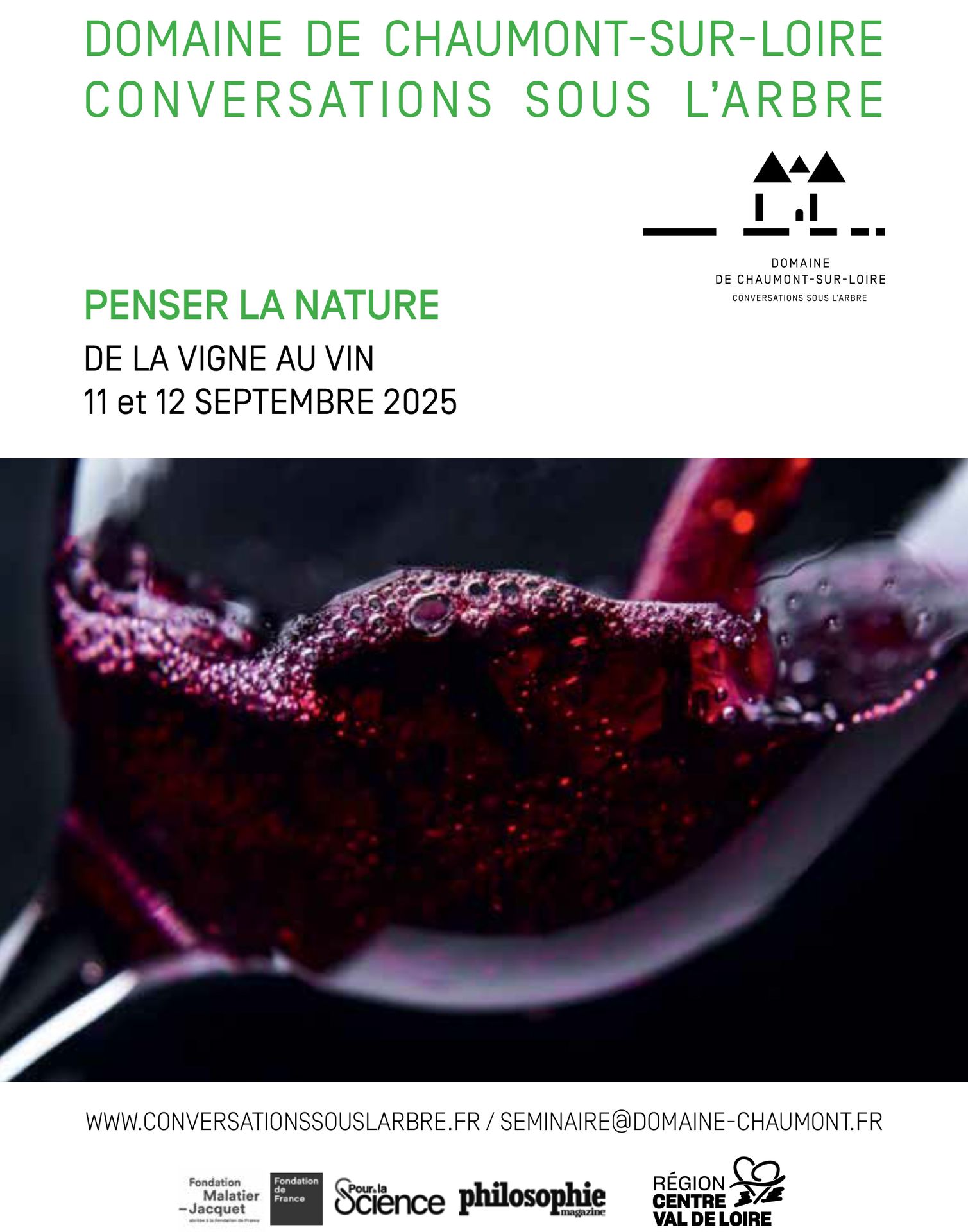
If, since Antiquity, the vine has held a singular place in the landscapes, imaginations and symbolism of human societies, it is because it is not a plant like any other. Through its climbing growth, the attention it requires and the complex transformation of its fruit, it is a mirror of humanity's relationship with nature: a relationship made of care, anticipation and interpretation. The vine compels us to think in the long term — that of the seasons, of ripening, of ageing — so that it inscribes in its cycle a tension between the moment and duration. It demands of us rigour and intuition, work and passion. Between patience and intoxication, the vine founds its symbolic power, representing both mastery of the living and the possibility of losing control. Thus, even before its grapes become wine, the vine summons agriculture, mythology, craftsmanship, thought and art. It does not merely produce fruit; it creates narrative and meaning.
GUESTS
- Pierre-Yves Quiviger, professor of Philosophy at Paris 1 Panthéon-Sorbonne, director of the Philosophy Faculty
- Marc-André Selosse, professor at the Muséum national d’Histoire naturelle in Paris and at the universities of Gdańsk (Poland) and Kunming (China)
- Pascaline Lepeltier, sommelier
- Nicolas Boulard, conceptual artist